

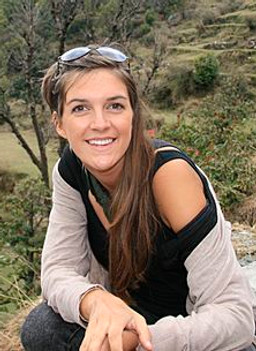
Dr Jess French is a vet, author and naturalist. She has written more than 30 books about animals and the natural world and is passionate about inspiring young people to get outside and learn about the wildlife on their doorstep. Together with Nature Bugs Forest School she is on an exciting mission to protect the future of our wild places… can you help?
Our Mission
Our goal is to turn the UK into a Pollination Nation, weaving a living corridor of wildflowers from coast to coast and providing an unbroken supply of nectar for our precious pollinators.
Each school will act as a single worker bee, wildifying its own small patch of earth, but together we will form a hive that stretches the length and breadth of the UK, transforming local, individual action into nationwide ecological change.
Are you in?

Why do we care?
Pollinators are essential for the reproduction of many wildflowers and food crops – simply put, without pollinators, our food system would collapse. Pollinators also provide other ecosystem services – they are foodstuffs for birds and small mammals, they contribute to soil health and many of them keep tiny plant pests in check too.
“But I don’t like vegetables or shredded wheat, I want a beefburger, no relish with chocolate for pudding!”
That may well be the case but the beef comes from cows which have grazed – and many of their food crops rely on pollinators too! As for the pudding... no pollinators = NO CHOCOLATE!!!!
What are pollinators?
You might think this is all about bees, and don’t get us wrong, we love honey as much as Winnie the Pooh does, but pollinators are so much more than honeybees - we just couldn’t fit them all onto our logo! Pollinators are animals that transfer pollen from plant to plant, allowing it to reproduce and create more plants. This group includes butterflies, dragonflies, fruit flies, birds, bees and even bats!
Where do schools come in?

It can feel a bit (lot) overwhelming to try and save the planet all on your own, and it’s easy to think ‘I can’t really make a difference, so what is the point?’ Not only that, in education settings time and budgets are tight and there are plenty of other things to occupy your brain. We get it. We’ve felt this way too. That’s why we’ve made this project as simple and impactful as we possibly can. All we need is for you to pledge one square metre of outdoor space, which you are willing to give over to nature.
We will send everything you need to turn your patch into a pollinator paradise. Native British wildflower seeds, a step-by-step guide and even some lesson plans for your classes so that you feel even more confident in teaching your changemakers. Feel free to pledge a larger area if you have the space and can raise the funds, why not challenge some of your school community to do the same. We are funding this ourselves so can only pledge the starter pack but it would be absolutely amazing to spread the Pollination Nation love far and wide.
What is our first target?
According to the WWF, on “a single day in summer, one acre of wildflower meadow can contain 3 million flowers, producing 1 kg of nectar. That’s enough to support nearly 96,000 honey bees per day.” Our first target is to cumulatively 'wild' one acre, that’s 3,446.86 m2 !

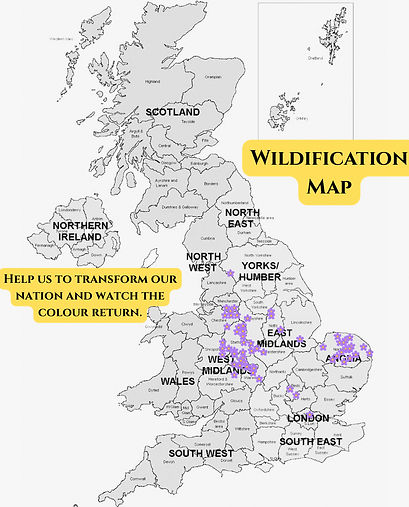
As we receive your pledges, we will add a splash of wildflower pigment to our map in the relevant area. We hope to see pockets of the UK become more colourful as our map does.


Current total
pledged...
2314m2
Hover over the flower above, just like a honey bee, to reveal our current total.
DID YOU KNOW?

Did you know that a third of all the food you eat has been made with the help of pollinators?
So serious we need to say it twice - without pollinators, there would be no chocolate!!!
Honeybees tell each other where the best flowers are by doing a dance! The waggle dance is the bee equivalent of when we spot a delicious new pudding on the shelves of the supermarket and tell our friends (either on social media or by actually speaking in person!)
Without insects, people would have to go round from plant to plant
pollinating them on their own – this would take soooo long, be extremely expensive and also give us all very bad backs.
Lots of medications are made from wildflowers.
Brilliant Books
This section has been created by Charlotte and Hayley, the books have been tested on the Nature Bugs and the Bentley Heath Book Clubbers (and Jess has refused to contribute because she is way too modest). We believe that every school library should have a copy of them and some make excellent screen-free PSHE and science resources.
These links take you to www.hive.co.uk . We try to use them to buy our books when they aren’t readily available in shops as they support your local bookshops.
Another way that schools can help to support our pollinators is to change the default search engine on your network to the not-for-profit www.ecosia.org which reinvests into the environment and creates new habitats.


Respect the Insect by Jules Howard. Illustrated by Gosia Herba, published by Quarto
Learn all about the importance of insects and why we need to support their survival. Funny, fab illustrations and full of facts
How to Help a Hedgehog and Protect a Polar Bear by Jess French. Illustrated by Angela Keoghan, published by Nosy Crow
Explores habitats across the world, their importance and how to ensure they endure.
It's a Wonderful World
How to Protect the Planet and Change the Future by Jess French. Illustrated by Aleesha Nandhra, published by DK
Part of a series, this book teaches us how small changes can make a huge difference which is what we are all about.
Why do we need bees? by Katie Daynes. Illustrated by Christine Pym, published by Usborne
Engaging lift-the-flap book full of great, age appropriate information for younger readers.
The Secret Life of Bees by Moira Butterfield. Illustrated by Vivien Minekar, published by Quarto.
Queen (bee) of the factual fiction genre, telling a story and teaching facts simultaneously, this is part of a superb series of nature books.
University of Cambridge: Think Big: Secrets of Bees by Ben Hoare. Illustrated by Nina Chakrabarti, published by Nosy Crow
Big ideas for curious minds are simply explained in this fascinating book about the secrets of bees.
Contact Us

-
If you are a school that wishes to participate and we haven’t yet started to cover your area.
-
If you are a seller of native British wildflower seeds and would be interested in collaborating with us to offer free seeds to schools covering our 1m2 pledges plus a discount for participants to use to create wider areas/ share with their school communities.
-
If you are a member of the press and wish to speak to one of us in order to help us to spread the word about this rewilding mission.
Please note that we are unable to respond to any emails regarding Pollination Nation which are sent to our Nature Bugs email or via the site contact form. We are a tiny group of people who have full time jobs so please be patient if it takes us a while to respond – we can assure you we will be doing our best.
Appeal to seed providers
Please get in touch if you are a seller of British wildflower seeds and would be interested in collaborating with us to offer free seeds to schools covering our 1m2 pledges plus a discount for participants to use to create wider areas/ share with their school communities.